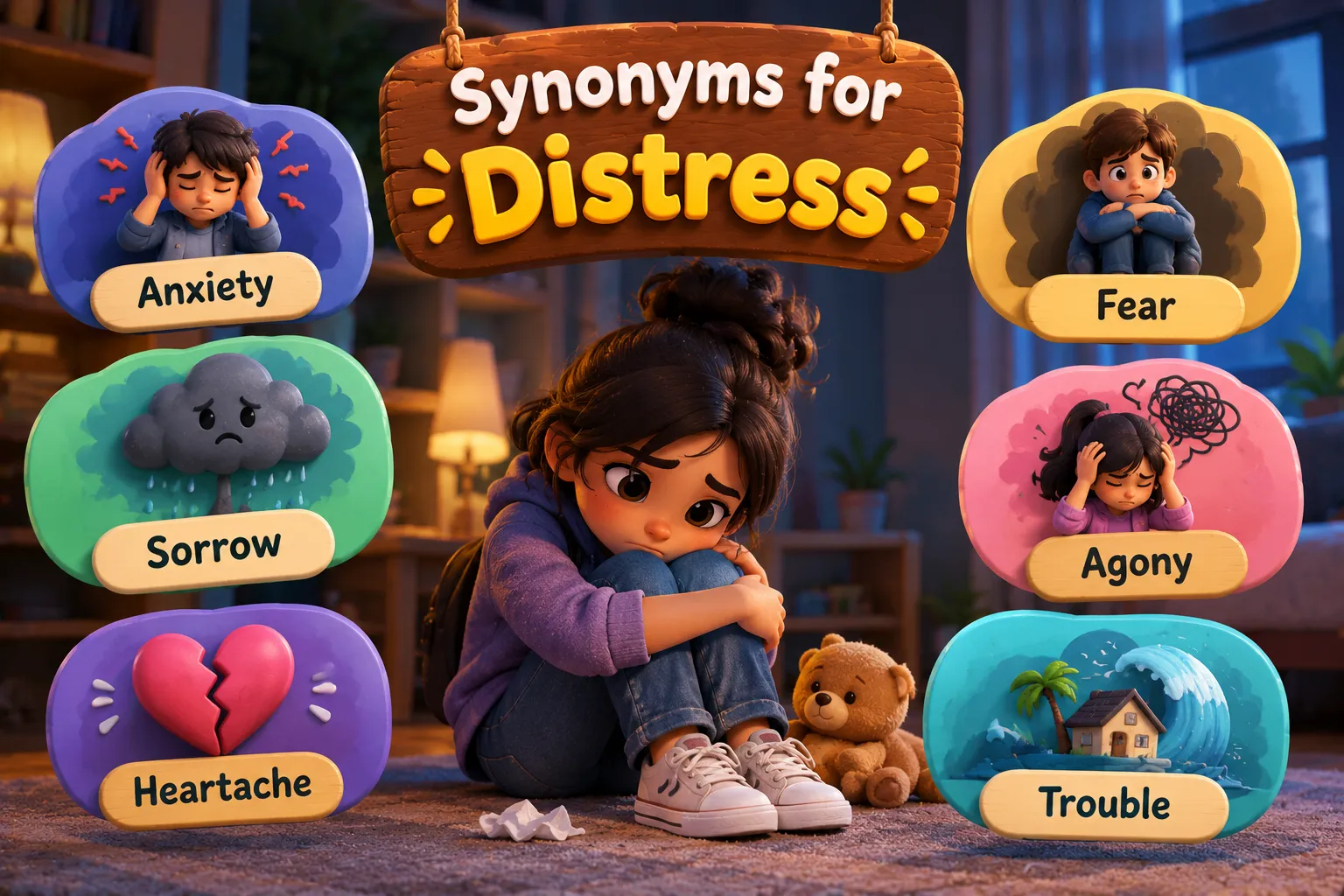
Synonyms for distress include anguish, suffering, misery, pain, sorrow, grief, anxiety, and worry.Distress means great pain, sadness, fear, or worry.It can describe emotional pain or physical discomfort.For example, losing a loved one may cause deep distress.The word can also describe a person who needs urgent help.The best synonym depends on the situation and the feeling you want to express.
Distress is a feeling of great pain, worry, sadness, or fear. Imagine a student who has an important exam but feels unprepared. The student may feel stress and distress because of the pressure. In another situation, a person may feel deep distress after losing someone they love. The word is common in daily speech, books, news, and formal writing because it describes difficult feelings and painful situations.
Learning synonyms for distress helps English learners express emotions more clearly. It also helps writers avoid repeating the same word. Some alternatives, such as anguish and misery, show deep emotional pain. Others, such as anxiety and worry, describe fear about what may happen. This guide explains the meaning, pronunciation, history, and word forms of distress. It also provides 29 related words with simple meanings and examples.
Meaning of Distress
Definition
Distress (Noun and Verb):
As a noun, distress means great physical pain, emotional suffering, worry, or trouble.
As a verb, distress means to cause someone great worry, sadness, or pain.
Examples
- The child was in distress after getting lost.
- She felt deep distress when she heard the sad news.
- The loud noise distressed the baby.
- The rescue team helped people in distress.
Connotative Meaning
Connotation is the feeling or idea that a word suggests beyond its basic meaning.
- Positive tone: Distress usually has a negative meaning, but the phrase relief from distress can suggest hope and comfort. Example: The kind words brought relief from her distress.
- Negative tone: It often suggests pain, fear, sadness, or worry. Example: He showed signs of emotional distress.
- Neutral tone: In formal reports, it can describe a difficult condition without expressing a personal judgment. Example: The report described the distress caused by the flood.
Etymology of Distress
The word distress entered English through Old French and Anglo-French forms related to Latin districtus, meaning tightly drawn or constrained. Its early meanings were linked to hardship, trouble, and pressure.
- Old English (450–1100): The modern word distress was not a common Old English word. Other words were used to describe pain, hardship, and trouble.
- Middle English (1100–1500): Distress entered English through French forms and referred to hardship, suffering, trouble, or a state of being under pressure.
- Modern English (1500–Present): The word developed its familiar meanings of emotional suffering, physical discomfort, serious trouble, and a condition that causes great worry.
Pronunciation (IPA)
- IPA: /dɪˈstres/
- Syllables: dis-tress (2 syllables)
Affixation Pattern of Distress
- Root: Distress
- Prefix: No separate prefix is normally identified in modern English.
- Suffix: No separate suffix appears in the basic word.
Word Formations
| Word | Part of Speech | Meaning |
| Distress | Noun | Great pain, worry, or suffering |
| Distress | Verb | To cause pain, sadness, or worry |
| Distressed | Adjective | Feeling upset, worried, or troubled |
| Distressed | Verb form | Caused someone pain or worry |
| Distressing | Adjective | Causing sadness, worry, or pain |
| Distressing | Verb form | Causing distress |
| Distressingly | Adverb | In a way that causes worry or sadness |
| Distresses | Noun/Verb | Different forms of distress |
| Distressful | Adjective | Causing or involving distress; less common than distressing |
| Distress signal | Noun phrase | A message that asks for urgent help |
| Emotional distress | Noun phrase | Strong emotional pain or worry |
| Financial distress | Noun phrase | Serious money problems |
29 Synonyms of Distress With Meaning and Examples
Note: These words have related meanings, but they are not exact substitutes in every sentence. Choose the word that best matches the type and level of distress.
1. Anguish (Noun)
Meaning: Severe mental or emotional pain.
Examples:
- She felt anguish after losing her beloved pet.
- His face showed the anguish he felt inside.
2. Suffering (Noun)
Meaning: Physical pain or emotional hardship.
Examples:
- The flood caused great suffering in the village.
- Her family helped ease his suffering.
3. Misery (Noun)
Meaning: A state of great unhappiness or discomfort.
Examples:
- The long illness brought him misery.
- She wanted to help the family escape their misery.
4. Pain (Noun)
Meaning: Physical discomfort or emotional hurt.
Examples:
- He felt pain after the accident.
- Her words caused him emotional pain.
5. Sorrow (Noun)
Meaning: Deep sadness, often caused by loss or disappointment.
Examples:
- She felt sorrow after her friend’s death.
- His eyes showed his sorrow.
6. Grief (Noun)
Meaning: Deep sadness caused by someone’s death or a major loss.
Examples:
- The family experienced deep grief after the loss.
- Friends offered support during her grief.
7. Anxiety (Noun)
Meaning: A feeling of worry or fear about something that may happen.
Examples:
- He felt anxiety before the interview.
- The news caused anxiety among the workers.
8. Worry (Noun)
Meaning: Unease caused by thinking about a problem or possible danger.
Examples:
- Her main worry was the cost of the trip.
- He tried not to let worry affect his sleep.
9. Agony (Noun)
Meaning: Extreme physical or emotional pain.
Examples:
- He was in agony after the injury.
- Waiting for the results felt like agony.
10. Torment (Noun)
Meaning: Severe and lasting physical or emotional suffering.
Examples:
- The memory became a source of torment.
- He lived in torment after the terrible event.
11. Heartache (Noun)
Meaning: Deep sadness, especially from loss or disappointment.
Examples:
- The breakup caused her heartache.
- He spoke about the heartache of leaving home.
12. Despair (Noun)
Meaning: A feeling that there is no hope.
Examples:
- She felt despair after repeated failures.
- The news filled him with despair.
13. Unhappiness (Noun)
Meaning: The state of feeling sad or dissatisfied.
Examples:
- He did not hide his unhappiness.
- Family problems caused her unhappiness.
14. Sadness (Noun)
Meaning: The feeling of being unhappy or sorrowful.
Examples:
- A wave of sadness came over her.
- The film filled him with sadness.
15. Trouble (Noun)
Meaning: A problem or difficult situation that causes concern.
Examples:
- The family faced trouble after the storm.
- She called her friend when she was in trouble.
16. Hardship (Noun)
Meaning: A difficult condition that causes suffering or makes life harder.
Examples:
- The family faced hardship during the winter.
- They worked together to overcome hardship.
17. Adversity (Noun)
Meaning: A difficult or challenging situation.
Examples:
- She remained hopeful in the face of adversity.
- The team grew stronger through adversity.
18. Agitation (Noun)
Meaning: A state of nervousness, worry, or upset.
Examples:
- His agitation grew as the meeting continued.
- She spoke in a state of agitation.
19. Disturbance (Noun)
Meaning: Something that interrupts peace or causes worry.
Examples:
- The loud noise caused a disturbance.
- The sudden event created a disturbance in the community.
20. Alarm (Noun)
Meaning: A sudden feeling of fear or concern about possible danger.
Examples:
- The smoke caused alarm among the residents.
- Her strange message raised the alarm.
21. Fear (Noun)
Meaning: The feeling of being afraid of danger or harm.
Examples:
- The child felt fear during the storm.
- Fear spread after the warning.
22. Frustration (Noun)
Meaning: Annoyance caused by being unable to do or achieve something.
Examples:
- He felt frustrated when the computer stopped working.
- The delay caused frustration for the passengers.
23. Discomfort (Noun)
Meaning: A feeling of physical or emotional unease.
Examples:
- The tight shoes caused discomfort.
- She felt uncomfortable during the difficult talk.
24. Disturbance of Mind (Noun Phrase)
Meaning: A state of mental unease or upset.
Examples:
- The sudden change caused a disturbance of mind.
- He sought help to ease his mental unease.
25. Aggravation (Noun)
Meaning: Annoyance or increased difficulty caused by a problem.
Examples:
- The extra delay caused great aggravation.
- She felt aggravation when the issue returned.
26. Wretchedness (Noun)
Meaning: A state of deep unhappiness or misery.
Examples:
- The story described the wretchedness of life during the war.
- He wanted to escape his feelings of wretchedness.
27. Desolation (Noun)
Meaning: A feeling or state of great sadness, emptiness, or loneliness.
Examples:
- She felt desolation after moving away from her family.
- The empty house filled him with desolation.
28. Dejection (Noun)
Meaning: A state of low spirits or sadness.
Examples:
- He showed dejection after losing the match.
- Her dejection faded when her friends arrived.
29. Melancholy (Noun)
Meaning: A deep, often quiet or lasting sadness.
Examples:
- A sense of melancholy filled the room.
- The song brought back feelings of melancholy.
Prototype Meaning
The most common meaning of distress is a state of great emotional or physical suffering. People may picture someone crying after receiving bad news, a person feeling deep worry, or a family facing a serious problem. Distress can also describe a person who needs urgent help, as in the phrase a person in distress. The word is stronger than ordinary worry in many situations because it often suggests serious discomfort or suffering. Its exact meaning depends on the context.
Prototype Categorization
The synonyms above can be grouped by the kind of distress they describe. This helps writers choose words that match the situation.
- Deep emotional pain: Anguish, heartache, grief, sorrow, and agony. These words suit painful loss or intense sadness.
- General sadness and unhappiness: Misery, sadness, unhappiness, wretchedness, dejection, and melancholy. These words describe different forms of low mood or sorrow.
- Fear and worry: Anxiety, worry, fear, and alarm. Use these when someone feels uneasy about danger or what may happen.
- Severe suffering and hopelessness: Suffering, torment, despair, and desolation. These words suggest intense pain or a sense of having little hope.
- Problems and difficult conditions: Trouble, hardship, adversity, and oppression. These describe difficult situations that may cause distress.
- Nervousness and upset: Agitation, disturbance, disturbance of mind, and frustration. These words fit situations involving mental unease, interruption, or blocked goals.
- Physical or general discomfort: Pain and discomfort. These words are useful when the distress is physical or less intense.
- Annoyance or added difficulty: Aggravation. This is useful when a problem makes a situation more frustrating.
Choosing the right category helps you express the exact feeling or problem. For example, use grief for sadness after a death, anxiety for worry about the future, and agony for extreme pain.
Antonyms of Distress
The best opposite of distress depends on whether it refers to emotional suffering, worry, or a difficult situation.
| Antonym | Part of Speech | Meaning |
| Comfort | Noun/Verb | A state of ease or an action that reduces pain |
| Relief | Noun | A feeling of comfort after worry or pain decreases |
| Peace | Noun | A state of calm without worry or conflict |
| Calm | Noun/Adjective/Verb | A peaceful state or to make someone less upset |
| Contentment | Noun | A feeling of satisfaction and ease |
| Happiness | Noun | A state of joy or pleasure |
| Joy | Noun | A strong feeling of happiness |
| Pleasure | Noun | A feeling of enjoyment or satisfaction |
| Reassurance | Noun | Words or actions that reduce fear or worry |
| Well-being | Noun | A state of health, comfort, and happiness |
Short Questions and Answers
1. What does distress mean?
Distress means great physical pain, emotional suffering, worry, or trouble. It can describe a person’s feelings or a difficult situation.
2. When should distress be used?
Use distress when describing serious worry, sadness, pain, or hardship. For example, The family was in distress after losing their home.
3. Is distress positive or negative?
Distress usually has a negative meaning because it describes suffering, fear, or worry. However, phrases such as relief from distress describe a positive change.
4. How is distress different from similar words?
Distress is a broad term for suffering or serious worry. Anxiety focuses on fear or worry, grief often relates to loss, and agony describes extreme pain.
Conclusion
Learning synonyms for distress helps you describe feelings and difficult situations with greater accuracy. Words such as anguish, grief, and misery express deep emotional pain, while anxiety, worry, and fear focus on concern or possible danger. Other words, such as hardship and adversity, describe difficult life conditions. Each synonym has its own meaning and level of intensity, so choose one that fits your sentence. Reading examples and using new words in daily writing can help you remember them. Practice a few synonyms each day to reduce repetition, improve your speaking and writing, and build confidence in English.
Read More:
Synonyms for Basis: 27 Useful Words to Learn

I’m Pinki, an SEO writer at SynonymsInstant.com, specializing in synonyms, antonyms, vocabulary, word meanings, grammar, and English usage. I create accurate, well-researched, reader-friendly content that combines language expertise with SEO best practices. My goal is to make English vocabulary simple, useful, and accessible for students, writers, professionals, and English learners.