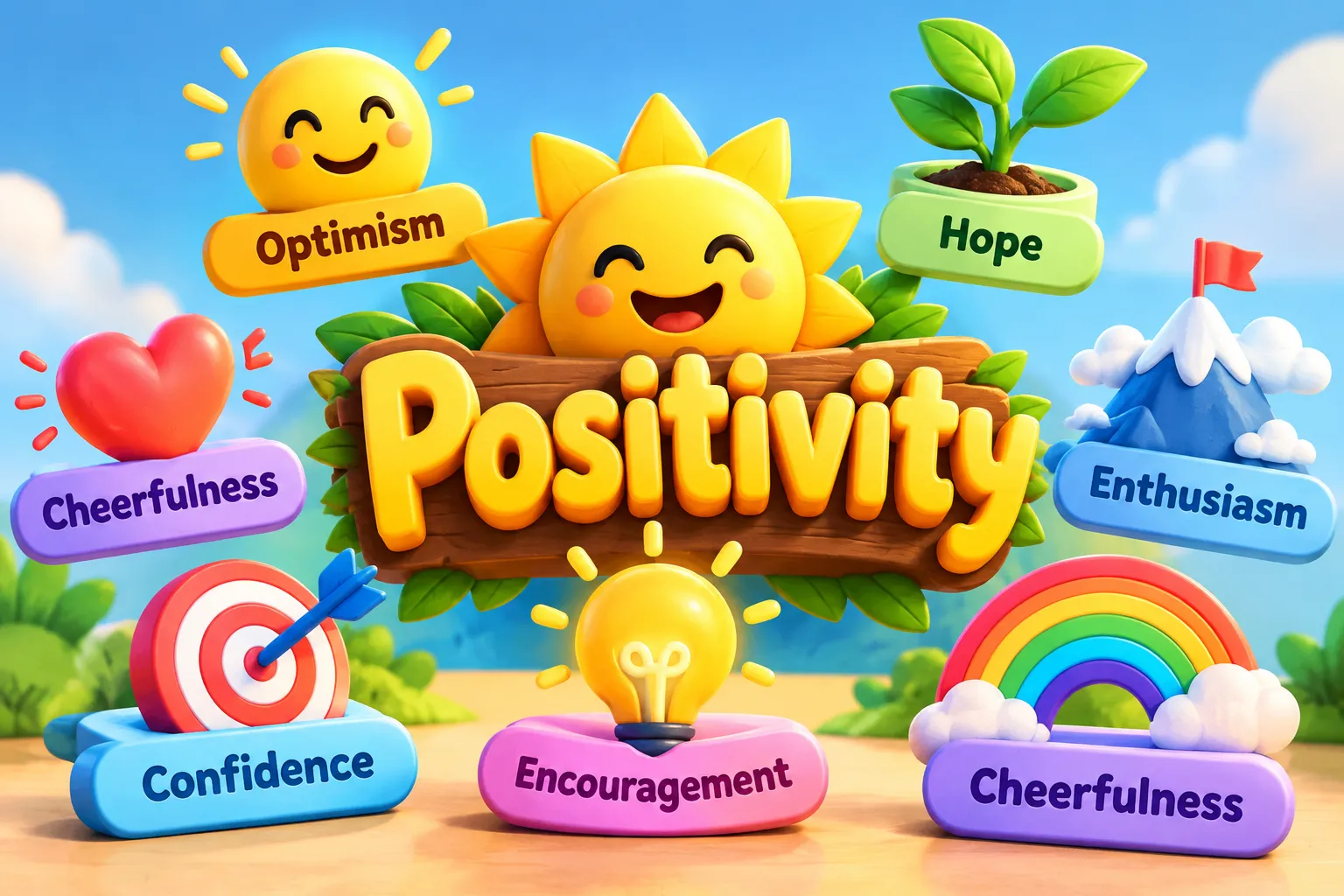
Common synonyms for positivity include optimism, hopefulness, confidence, happiness, cheerfulness, enthusiasm, joy, encouragement, resilience, and goodwill. These words describe positive feelings, hopeful thoughts, and a belief in better outcomes. For example, optimism helps people stay hopeful during hard times, while enthusiasm shows excitement about a task. Learning synonyms for positivity can improve your English vocabulary, strengthen your writing, and help you express positive thoughts clearly
Positivity means having a hopeful attitude and looking for the good in life. Imagine a student who fails a test but decides to study harder instead of giving up. This student shows positivity by focusing on improvement rather than failure. Positivity is a common word in daily life because people use it to talk about hope, happiness, confidence, and a healthy outlook. Learning synonyms for positivity helps English learners find better words to express their feelings and ideas. It also helps content writers create clear, interesting, and engaging content without repeating the same words. In this guide, you will learn the meaning of positivity, its pronunciation, history, word forms, and 30 useful synonyms with simple meanings and examples. You will also explore related words, antonyms, and semantic groups.
Meaning of Positivity
Definition
Positivity (Noun): Positivity is the quality of having a hopeful, confident, and constructive attitude toward life, people, or situations.
Examples
- Her positivity helped the team stay hopeful during a difficult project.
- A little positivity can make a hard day feel easier.
Connotative Meaning
Connotation (the feelings or ideas a word brings to mind) helps explain the emotional meaning of positivity.
- Positive tone: Positivity usually suggests hope, happiness, confidence, kindness, and encouragement.
- Negative tone: In some situations, positivity can suggest ignoring real problems or pretending that everything is fine.
- Neutral tone: In psychology and general discussion, positivity can describe a positive attitude or outlook without judging it.
Etymology of Positivity
The word positivity comes from positive, which entered English through French from Latin. The Latin word positivious relates to something laid down, established, or definite. The ending -ity turns the adjective positive into the noun positivity.
| Period | Language Development | Explanation |
| Old English (450–1100) | No direct established form of positivity | Old English had other words for hope and good feelings, but the modern word was not in common use. |
| Middle English (1100–1500) | Influence from French and Latin | Words related to positive entered English through French and Latin, expressing ideas such as certainty and definiteness. |
| Modern English (1500–Present) | Positive + -ity | Positivity developed as a noun for the quality of being positive. Today, it often describes a hopeful attitude and constructive outlook. |
Pronunciation of Positivity (IPA)
- IPA: /ˌpɑː.zəˈtɪv.ə.ti/ (American English; pronunciation may vary by accent)
- Syllables: pos-i-tiv-i-ty
- Syllable count: Five
- Word stress: The main stress falls on TIV.
Affixation Pattern of Positivity
- Root/base word: Positive
- Prefix: None
- Suffix: -ity, which forms a noun expressing a state, quality, or condition.
- Word formation: Positive + -ity = positivity
Related Word Forms
- Positivity (noun): The quality of having a positive attitude.
- Positive (adjective): Hopeful, constructive, or confident.
- Positively (adverb): In a positive or constructive way.
- Positiveness (noun): The quality of being positive or definite.
- Positivism (noun): A philosophical approach that emphasizes knowledge based on observable facts and scientific evidence.
30 Synonyms of Positivity With Meanings and Examples
The following words are closely related to positivity. Some are direct alternatives, while others describe specific parts of a positive attitude, such as hope, happiness, confidence, or encouragement.
1. Optimism (Noun)
Meaning: The belief that good things may happen in the future.
Examples:
- Her optimism helped her face the challenge.
- Optimism gave him hope after his setback.
2. Hopefulness (Noun)
Meaning: The feeling that something good may happen.
Examples:
- Hopefulness filled the room after the good news.
- Her hopefulness helped her keep trying.
3. Cheerfulness (Noun)
Meaning: The quality of being happy and pleasant.
Examples:
- His cheerfulness made everyone smile.
- She greeted her friends with cheerfulness.
4. Happiness (Noun)
Meaning: The feeling of being pleased, joyful, or content.
Examples:
- Spending time with family brings her happiness.
- His happiness was clear after he passed the exam.
5. Enthusiasm (Noun)
Meaning: Strong excitement and interest in something.
Examples:
- She showed enthusiasm for her new job.
- His enthusiasm encouraged the whole team.
6. Confidence (Noun)
Meaning: Belief in yourself or your ability to do something.
Examples:
- Practice helped build her confidence.
- His confidence helped him speak in public.
7. Encouragement (Noun)
Meaning: Words or actions that give someone hope and support.
Examples:
- The teacher gave the student encouragement.
- A few kind words can offer great encouragement.
8. Joy (Noun)
Meaning: A strong feeling of happiness and delight.
Examples:
- The children shouted with joy.
- Her success brought joy to the family.
9. Contentment (Noun)
Meaning: A feeling of peace and satisfaction with what you have.
Examples:
- He found contentment in a simple life.
- Contentment helped her enjoy the present moment.
10. Resilience (Noun)
Meaning: The ability to recover from problems and keep going.
Examples:
- Her resilience helped her overcome failure.
- Resilience is useful during difficult times.
11. Motivation (Noun)
Meaning: The desire or reason to act and achieve something.
Examples:
- His goals gave him motivation to study.
- A good teacher can increase student motivation.
12. Inspiration (Noun)
Meaning: Something that gives you new ideas, hope, or the desire to act.
Examples:
- Her story was an inspiration to others.
- The speech gave me inspiration to work harder.
13. Gratitude (Noun)
Meaning: The feeling of being thankful for something.
Examples:
- She expressed gratitude for her friend’s help.
- Gratitude helped him value the small things in life.
14. Serenity (Noun)
Meaning: A state of calm and peacefulness.
Examples:
- She enjoyed the serenity of the garden.
- Meditation brought him a sense of serenity.
15. Peacefulness (Noun)
Meaning: The quality of being calm and free from conflict.
Examples:
- The peacefulness of the village relaxed us.
- She brought peacefulness to the busy home.
16. Goodwill (Noun)
Meaning: A friendly and kind attitude toward others.
Examples:
- The charity event spread goodwill in the community.
- Goodwill helps people build strong relationships.
17. Faith (Noun)
Meaning: Strong trust or belief in someone or something.
Examples:
- She had faith in her abilities.
- His faith in the team remained strong.
18. Assurance (Noun)
Meaning: A feeling of confidence or certainty.
Examples:
- Her teacher’s support gave her assurance.
- He spoke with assurance during the meeting.
19. Eagerness (Noun)
Meaning: A strong desire to do or learn something.
Examples:
- The children showed eagerness to learn.
- His eagerness made the project exciting.
20. Liveliness (Noun)
Meaning: The quality of being energetic and full of life.
Examples:
- Her liveliness made the party more fun.
- The children’s liveliness filled the classroom.
21. Friendliness (Noun)
Meaning: The quality of being kind, warm, and pleasant toward others.
Examples:
- The staff welcomed us with friendliness.
- Her friendliness helped new students feel comfortable.
22. Constructiveness (Noun)
Meaning: The quality of helping improve a situation or solve a problem.
Examples:
- His constructiveness helped the team find a solution.
- The discussion focused on constructiveness rather than blame.
23. Open-mindedness (Noun)
Meaning: A willingness to consider new ideas and different views.
Examples:
- Open-mindedness helped them solve the disagreement.
- Teachers need open-mindedness when hearing new ideas.
24. Empowerment (Noun)
Meaning: The process of helping someone gain confidence, control, or ability.
Examples:
- Education can bring empowerment to young people.
- Her manager encouraged employee empowerment.
25. Buoyancy (Noun)
Meaning: A cheerful and hopeful mood, especially during hard times.
Examples:
- Her buoyancy lifted everyone’s spirits.
- He faced the setback with remarkable buoyancy.
26. Exuberance (Noun)
Meaning: Great energy, excitement, and happiness.
Examples:
- The children showed exuberance at the school event.
- His exuberance made the celebration lively.
27. Altruism (Noun)
Meaning: The desire to help others without expecting a reward.
Examples:
- Her altruism inspired her friends to volunteer.
- Altruism can strengthen a community.
28. Well-being (Noun)
Meaning: The state of being healthy, comfortable, and happy.
Examples:
- Exercise can improve your mental well-being.
- The school cares about the well-being of its students.
29. Positiveness (Noun)
Meaning: The quality of having a positive attitude or outlook.
Examples:
- Her positiveness helped the group stay focused.
- He showed positiveness while facing the challenge.
30. Favorable Outlook (Noun Phrase)
Meaning: A hopeful view of what may happen in the future.
Examples:
- The team had a favorable outlook after its early success.
- A favorable outlook helped her prepare for the future.
Prototype Meaning of Positivity
The most typical meaning of positivity is a hopeful and constructive attitude toward life. When people hear the word, they often imagine someone who stays hopeful during hard times, supports others, and looks for ways to solve problems. A positive person does not need to feel happy all the time. Instead, they try to focus on what they can learn, change, or improve. For example, a student who fails a test but studies harder for the next one shows positivity. This attitude can help people handle stress, build relationships, and work toward their goals.
Prototype Categorization of Positivity
The 30 synonyms can be grouped into categories based on the type of positive feeling or attitude they express.
1. Hope and Future Thinking
- Optimism: Belief in good outcomes.
- Hopefulness: Expectation that things may improve.
- Faith: Trust in someone or something.
- Favorable outlook: A hopeful view of the future.
- Buoyancy: Hopeful cheerfulness during difficulties.
These words are useful when writing about goals, challenges, and future plans.
2. Happiness and Positive Emotions
- Happiness: General pleasure and satisfaction.
- Joy: Strong happiness.
- Cheerfulness: A pleasant and happy mood.
- Exuberance: Great excitement and energy.
- Contentment: Peace with what you have.
Use these words when describing feelings, celebrations, or enjoyable experiences.
3. Confidence and Personal Growth
- Confidence: Belief in your abilities.
- Assurance: A feeling of certainty.
- Motivation: The desire to take action.
- Empowerment: Gaining confidence or control.
- Resilience: The ability to recover from difficulties.
These words fit discussions about learning, success, self-development, and overcoming problems.
4. Support and Kindness
- Encouragement: Support that gives someone hope.
- Goodwill: Friendly feelings toward others.
- Friendliness: A warm and kind attitude.
- Gratitude: Thankfulness.
- Altruism: Helping others without expecting a reward.
Use these words when writing about friendship, teamwork, kindness, and community life.
5. Peace and Emotional Balance
- Serenity: A calm state of mind.
- Peacefulness: Freedom from conflict or disturbance.
- Well-being: A state of health and comfort.
- Open-mindedness: Willingness to consider other views.
- Constructiveness: A focus on useful improvements.
These words work well in writing about mental balance, relationships, and personal development.
6. Energy and Interest
- Enthusiasm: Strong interest and excitement.
- Eagerness: A strong desire to participate.
- Liveliness: Energy and life.
- Inspiration: Something that encourages action or ideas.
- Positiveness: A positive attitude or outlook.
Use these words to describe active people, exciting projects, and a strong desire to learn.
How does this categorization help writers?
These categories help writers select words that match their exact meaning. For example, optimism is suitable for hope about the future, while cheerfulness describes a happy mood. Resilience focuses on recovering from setbacks, and gratitude expresses thankfulness. Choosing the right synonym makes writing more natural, clear, and engaging.
Antonyms of Positivity
Antonyms are words with opposite or contrasting meanings. The best antonym depends on the context in which positivity is used.
| Antonym | Part of Speech | Meaning |
| Negativity | Noun | A tendency to focus on bad outcomes or unpleasant ideas. |
| Pessimism | Noun | The belief that things are likely to go badly. |
| Hopelessness | Noun | A feeling that nothing will improve. |
| Despair | Noun | A deep feeling of losing hope. |
| Gloom | Noun | A state of sadness or darkness. |
| Sadness | Noun | The feeling of being unhappy. |
| Discouragement | Noun | A loss of hope or confidence. |
| Cynicism | Noun | A belief that people are mainly driven by selfish motives. |
| Defeatism | Noun | The belief that failure is unavoidable. |
| Despondency | Noun | A state of low spirits and little hope. |
| Hostility | Noun | An unfriendly or aggressive attitude. |
| Unfriendliness | Noun | A lack of warmth or kindness toward others. |
| Doubt | Noun | A feeling of uncertainty or lack of confidence. |
| Insecurity | Noun | A lack of confidence or a feeling of uncertainty. |
| Misery | Noun | Great unhappiness or suffering. |
Short Questions and Answers
1. What does positivity mean?
Positivity means having a hopeful, constructive, and often cheerful attitude toward life and its challenges.
2. When should positivity be used?
Use positivity when discussing a hopeful attitude, personal growth, encouragement, or a constructive way of handling problems.
3. Is positivity positive or negative?
Positivity is generally positive. However, it can have a negative implication when someone uses it to ignore real problems or dismiss another person’s feelings.
4. How is positivity different from similar words?
Positivity is a broad term for a constructive outlook. Optimism focuses on expecting good outcomes, happiness describes a pleasant feeling, and confidence means trusting your own abilities.
Conclusion
Learning positivity and its synonyms can help you express thoughts and feelings more clearly. Words such as optimism, hopefulness, cheerfulness, confidence, and resilience each describe a different part of a positive attitude. Using the right word can make your writing more meaningful and your speech more natural. These synonyms also help you avoid repetition when writing essays, articles, stories, or social media posts. For English learners, studying synonyms is a simple way to build vocabulary and improve communication skills. Try learning a few new words each day and using them in your own sentences. With regular practice, you can become more confident in English and share your ideas in a clear, positive, and engaging way.
Read More:
Synonyms for savior: 27 Powerful Alternatives

I’m Ayesha Haram, an English content and SEO writer at SynonymsInstant.com. I focus on creating helpful vocabulary resources, word guides, and practical English content that readers can understand quickly. I combine language research, clear explanations, and SEO-focused writing to produce reliable content that supports learners, writers, and everyday English users.