
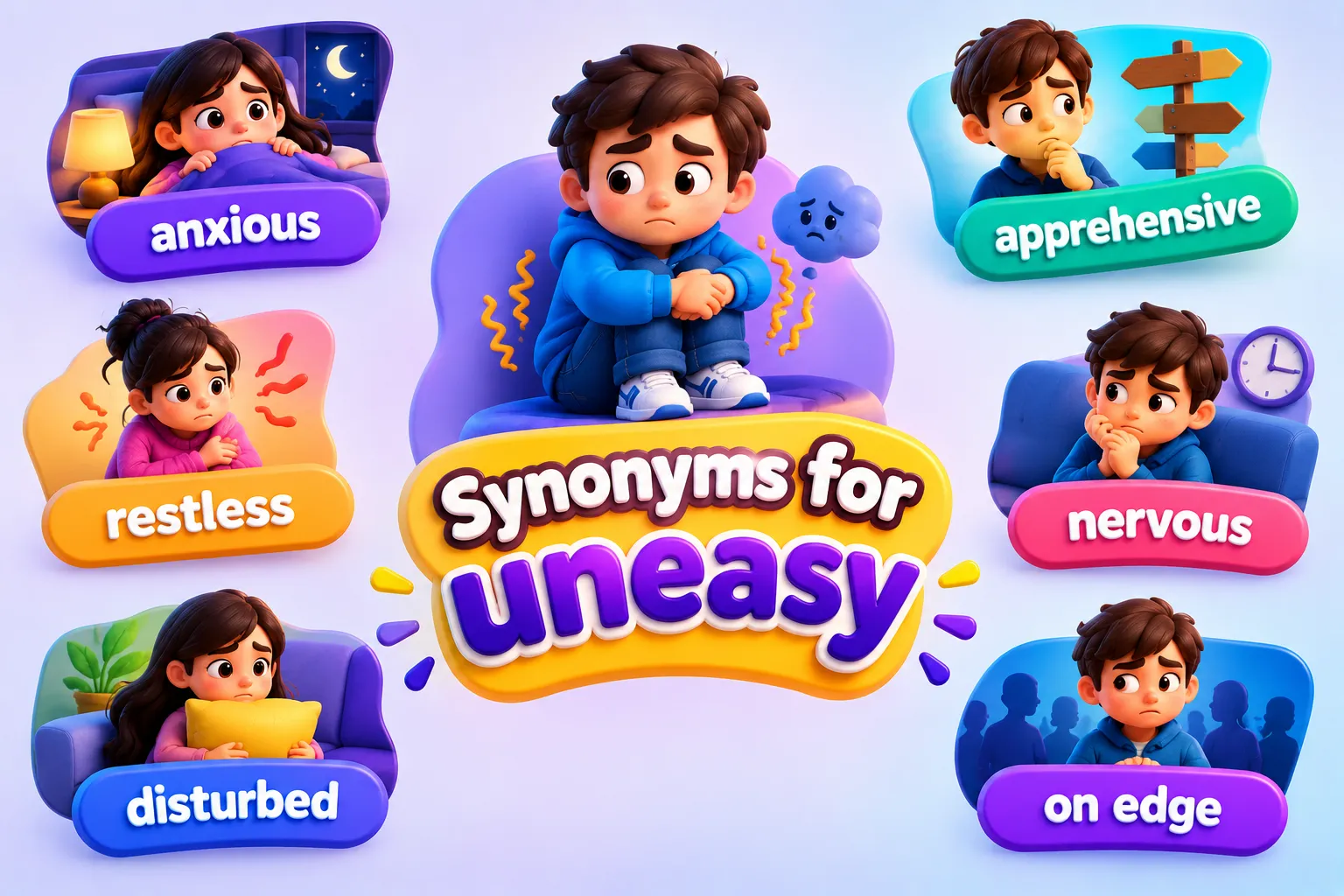
Useful synonyms include anxious, nervous, worried, concerned, uncomfortable, restless, troubled, apprehensive, tense, unsettled, insecure, fearful, doubtful, and disturbed. The best synonym depends on the situation and the level of worry or discomfort being described.
Uneasy means feeling worried, nervous, or uncomfortable about something. Imagine walking into a quiet room and feeling that something is not quite right. You may not know the reason, but you cannot fully relax. You feel uneasy. This word is common in everyday English because people often need to describe worry, doubt, fear, or discomfort. Learning synonyms for uneasy helps English learners express these feelings more clearly and naturally. It also helps writers avoid using the same word again and again. Different synonyms can show different levels of emotion, from mild discomfort to strong fear. In this article, we will explore the meaning, examples, pronunciation, history, word formation, and 25 useful synonyms of uneasy. We will also group them by meaning and explain their antonyms.
Meaning of Uneasy
Definition
Uneasy (Adjective):
Feeling worried, nervous, uncomfortable, or uncertain about something.
Examples
- I felt uneasy walking home alone at night.
- She became uneasy when her friend did not answer the phone.
Connotative Meaning
The emotional tone of uneasy can change with context:
- Positive tone: Usually none, although mild uneasiness can encourage someone to be careful.
- Negative tone: Worry, fear, discomfort, doubt, or nervousness.
- Neutral tone: A simple feeling of discomfort or uncertainty without strong fear.
(Connotation means the feeling or idea that a word suggests beyond its basic meaning.)
Etymology
The word uneasy is formed from un- meaning “not” and easy, meaning comfortable or free from difficulty. The word developed from the idea of not being at ease.
| English Period | Development |
| Old English (450–1100) | The root idea comes from easy, which entered English much later through French. Old English used native words such as unriht and other expressions to describe discomfort or lack of peace. |
| Middle English (1100–1500) | Easy developed in English from Old French aisie, meaning comfort, convenience, or ease. Forms expressing the opposite of ease also began to develop. |
| Modern English (1500–Present) | Uneasy became established as an adjective meaning uncomfortable, worried, nervous, or lacking peace of mind. |
Pronunciation (IPA)
- IPA: /ʌnˈiːzi/
- Syllables: un-ea-sy
Affixation Pattern of Uneasy
- Root: easy — comfortable, relaxed, or free from difficulty.
- Prefix: un- — meaning “not” or “opposite of.”
- Suffix: -y — part of the adjective easy.
- Word formations:
- Ease (noun/verb): comfort or freedom from difficulty; to make something less difficult.
- Easy (adjective/adverb): comfortable, simple, or without difficulty.
- Uneasy (adjective): worried, nervous, or uncomfortable.
- Uneasily (adverb): in a worried or uncomfortable way.
- Uneasiness (noun): a feeling of worry or discomfort.
25 Synonyms of Uneasy With Meaning & Examples
1. Anxious (Adjective)
Meaning: Feeling worried or nervous about something that may happen.
Examples:
- She felt anxious before the exam.
- He was anxious about his job interview.
2. Nervous (Adjective)
Meaning: Feeling worried, excited, or afraid about something.
Examples:
- I felt nervous before giving my speech.
- She was nervous about meeting the new manager.
3. Worried (Adjective)
Meaning: Thinking about problems or possible trouble with concern.
Examples:
- His parents were worried about him.
- I am worried about the coming storm.
4. Concerned (Adjective)
Meaning: Feeling worried about a person, situation, or problem.
Examples:
- The teacher was concerned about the student’s progress.
- We are concerned about the rising costs.
5. Uncomfortable (Adjective)
Meaning: Feeling physically or emotionally uncomfortable.
Examples:
- I felt uncomfortable during the conversation.
- The chair was very uncomfortable.
6. Restless (Adjective)
Meaning: Unable to relax or stay still because of worry or discomfort.
Examples:
- She had a restless night before the test.
- The child became restless during the long trip.
7. Troubled (Adjective)
Meaning: Experiencing worry, problems, or emotional difficulty.
Examples:
- He looked troubled after hearing the news.
- She had a troubled expression on her face.
8. Apprehensive (Adjective)
Meaning: Worried or afraid that something bad may happen.
Examples:
- She felt apprehensive about the long journey.
- He was apprehensive before starting the new job.
9. Tense (Adjective)
Meaning: Feeling nervous, stressed, or unable to relax.
Examples:
- Everyone was tense before the results arrived.
- The room became tense during the argument.
10. Unsettled (Adjective)
Meaning: Feeling disturbed, uncertain, or unable to feel calm.
Examples:
- The strange message left me unsettled.
- She felt unsettled after hearing the rumor.
11. Insecure (Adjective)
Meaning: Feeling uncertain about yourself, your situation, or your future.
Examples:
- He felt insecure about his new position.
- She became insecure after receiving criticism.
12. Fearful (Adjective)
Meaning: Feeling afraid or expecting danger.
Examples:
- The child was fearful of the dark.
- They were fearful that the plan might fail.
13. Disturbed (Adjective)
Meaning: Feeling upset or troubled because something has affected your peace.
Examples:
- I was disturbed by the strange sound.
- She looked disturbed after the conversation.
14. Perturbed (Adjective)
Meaning: Feeling worried, upset, or bothered by something.
Examples:
- He seemed perturbed by the sudden change.
- She was perturbed by the unexpected news.
15. Disquieted (Adjective)
Meaning: Feeling worried or lacking a sense of peace.
Examples:
- The news left everyone disquieted.
- He felt disquieted by the unusual behavior.
16. Restive (Adjective)
Meaning: Unable to stay calm because of impatience, worry, or dissatisfaction.
Examples:
- The audience became restive during the delay.
- The horses grew restive before the storm.
17. Agitated (Adjective)
Meaning: Very worried, upset, or emotionally excited.
Examples:
- She became agitated after hearing the accusation.
- He sounded agitated on the phone.
18. Distressed (Adjective)
Meaning: Feeling very worried, sad, or upset.
Examples:
- The child looked distressed after getting lost.
- She was distressed by the bad news.
19. Fretful (Adjective)
Meaning: Frequently worried, unhappy, or unable to relax.
Examples:
- The baby was fretful all evening.
- He became fretful while waiting for the results.
20. Concerned (Adjective)
Meaning: Feeling troubled or worried about something important.
Examples:
- She looked concerned about her friend.
- The manager was concerned about the delay.
21. Doubtful (Adjective)
Meaning: Feeling uncertain about whether something is true or will happen.
Examples:
- I am doubtful about his promise.
- She was doubtful that the plan would work.
22. Uncertain (Adjective)
Meaning: Not sure about something or what will happen.
Examples:
- He felt uncertain about his decision.
- We are uncertain about the future.
23. Fearful (Adjective)
Meaning: Feeling fear or strong concern about possible danger.
Examples:
- The villagers were fearful of the rising water.
- She was fearful that she might fail.
24. Nervy (Adjective)
Meaning: Nervous or tense because of a difficult situation.
Examples:
- It was a nervy final match.
- He felt nervy before the interview.
25. Jittery (Adjective)
Meaning: Very nervous and unable to stay calm.
Examples:
- I felt jittery before the presentation.
- Too much coffee made him jittery.
Prototype Meaning
The most typical meaning of uneasy is a mild or moderate feeling of worry or discomfort when something does not feel right. When people hear this word, they often imagine someone who cannot fully relax because of uncertainty, doubt, or a possible problem. For example, you may feel uneasy when walking alone in a dark place, waiting for important news, or meeting someone you do not trust.
Prototype Categorization
- General worry: anxious, worried, concerned, troubled — useful for everyday situations involving concern.
- Nervousness: nervous, tense, jittery, nervy, antsy — best for situations such as exams, interviews, speeches, or waiting.
- Fear and danger: fearful, apprehensive, distressed — stronger words that suggest possible danger or serious trouble.
- Discomfort and lack of peace: uncomfortable, unsettled, disquieted, disturbed, ill at ease — useful when something feels wrong or unpleasant.
- Uncertainty and doubt: uncertain, doubtful, insecure — useful when the problem comes from not knowing what will happen or what to believe.
- Strong emotional disturbance: agitated, perturbed, distressed — useful when uneasiness becomes more intense.
This grouping helps writers select the most accurate synonym instead of using uneasy for every type of worry.
Antonyms of Uneasy
| Antonym | Part of Speech | Meaning |
| Calm | Adjective | Feeling peaceful and relaxed. |
| Relaxed | Adjective | Free from worry or tension. |
| Comfortable | Adjective | Feeling physically or emotionally at ease. |
| Peaceful | Adjective | Free from stress, fear, or disturbance. |
| Confident | Adjective | Feeling sure about yourself or a situation. |
| Secure | Adjective | Feeling safe and protected. |
| Assured | Adjective | Feeling confident that something is true or safe. |
| Content | Adjective | Feeling satisfied and comfortable. |
| Reassured | Adjective | Feeling less worried after receiving comfort or good information. |
| Composed | Adjective | Calm and in control of your emotions. |
Short Questions and Answers
What does uneasy mean?
Uneasy means feeling worried, nervous, uncomfortable, or uncertain about something.
When should uneasy be used?
Use uneasy when someone cannot relax because a situation feels uncertain, uncomfortable, or possibly unsafe.
Is uneasy positive or negative?
Uneasy usually has a negative emotional tone because it describes worry or discomfort. However, it can sometimes encourage a person to be careful.
How is it different from similar words?
Uneasy is a broad word for discomfort or worry. Anxious often suggests stronger worry, nervous is common before an event, apprehensive suggests fear about what may happen, and uncomfortable can describe either physical or emotional discomfort.
Conclusion
Learning uneasy and its synonyms can greatly improve your English vocabulary. Words such as anxious, nervous, worried, concerned, apprehensive, tense, unsettled, and uncomfortable help you describe different forms of worry and discomfort. Each word has its own strength and use, so understanding the small differences can make your speaking and writing more natural. Using suitable synonyms also helps you avoid repetition in essays, articles, stories, and everyday conversations. English learners should practice these words by creating simple sentences and using them in real situations. Try learning a few synonyms each day and compare their meanings, tone, and context. With regular practice, you will become more confident when expressing emotions and choosing the right words in English.
Read More:
Synonyms for expansion: 28 Positive Alternatives to Explore

I’m Falak Naaz, an SEO writer at SynonymsInstant.com focused on creating clear, engaging, and search-friendly English content. I specialize in vocabulary, synonyms, antonyms, word usage, and language guides. I combine careful research with practical writing to deliver trustworthy content that helps readers choose the right words and improve their English with confidence.