
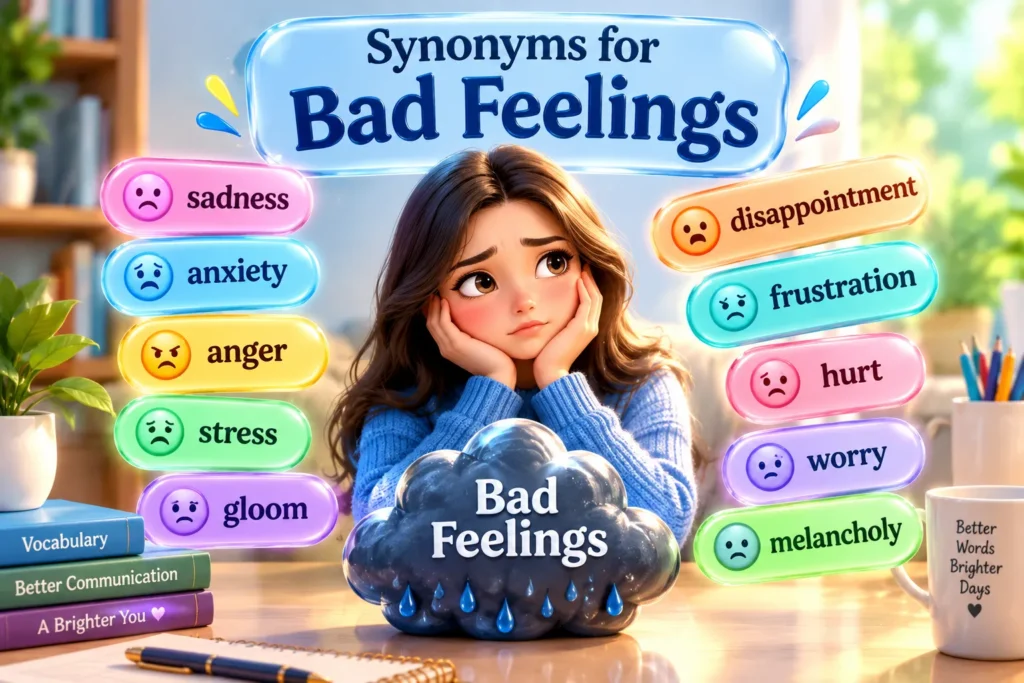
Synonyms for “bad feelings” include negative emotions, unpleasant emotions, distress, discomfort, resentment, sadness, anger, bitterness, anxiety, uneasiness, hostility, and ill feelings. The best synonym depends on the emotion you want to express. For example, negative emotions is a broad and neutral choice, resentment suggests lasting anger, bitterness describes deep hurt or anger, while uneasiness refers to worry or discomfort. For everyday writing, negative feelings, unpleasant emotions, and ill feelings are natural alternatives.
The phrase bad feelings is commonly used in English to describe emotional discomfort, negative moods, or unpleasant psychological states. It can refer to emotions such as sadness, anger, anxiety, guilt, jealousy, frustration, or emotional distress. For example, we might say someone has bad feelings after an argument, or that a situation created bad feelings in a group.
However, repeating the phrase bad feelings can make writing sound vague or repetitive. Learning synonyms helps you express emotions more precisely, improve vocabulary variety, and communicate emotional states more effectively in both personal and professional contexts. In this guide, we will explore the meaning of bad feelings, its usage, and 30 useful synonyms with examples and categories.
Meaning of Bad Feelings
Definition
Bad feelings (noun phrase): Negative emotional states such as sadness, anger, anxiety, discomfort, resentment, or emotional distress.
Examples
- She had bad feelings after the disagreement.
- The news created bad feelings among the team.
Connotative Meaning
Connotation (the emotional or implied meaning of a word):
- Negative tone: Emotional pain, discomfort, stress, or psychological unease.
- Neutral tone: General reference to unpleasant emotions without specifying type.
- Psychological tone: Internal emotional conflict or mental distress.
- Relational tone: Tension or discomfort between people.
Etymology
- Old English: feeling comes from fēlan, meaning “to perceive or sense”
- Proto-Germanic: foljaną meaning “to touch or perceive”
- Middle English: feeling evolved to include emotional perception as well as physical sensation
The phrase bad feelings developed in modern English as a simple way to describe unpleasant emotional experiences.
Pronunciation (IPA)
- IPA: /bæd ˈfiː.lɪŋz/
- Syllables: bad feel-ings (three syllables)
Word Function
- Type: Noun phrase
- Related forms:
- Feeling (noun)
- Feel (verb)
- Feelings (plural noun)
- Emotional (adjective)
- Affect (noun/verb in psychology)
29 Synonyms for Bad Feelings With Meaning & Examples
1. Sadness
Meaning: A feeling of unhappiness or sorrow.
Example:
- She felt deep sadness after the loss.
2. Grief
Meaning: Intense emotional pain caused by loss.
Example:
- He experienced grief after his friend passed away.
3. Sorrow
Meaning: A deep feeling of sadness or regret.
Example:
- There was great sorrow in the room.
4. Anguish
Meaning: Severe emotional or mental pain.
Example:
- She cried in anguish after the accident.
5. Distress
Meaning: Extreme anxiety, sorrow, or pain.
Example:
- The news caused him distress.
6. Anxiety
Meaning: A feeling of worry or nervousness.
Example:
- He felt anxiety before the exam.
7. Worry
Meaning: A state of unease about something uncertain.
Example:
- She had worry about her job.
8. Fear
Meaning: An emotional response to danger or threat.
Example:
- He felt fear during the storm.
9. Dread
Meaning: Strong fear or anticipation of something bad.
Example:
- She felt dread before the meeting.
10. Unease
Meaning: A mild feeling of discomfort or anxiety.
Example:
- There was unease in the room.
11. Discomfort
Meaning: A feeling of physical or emotional uneasiness.
Example:
- He felt discomfort during the discussion.
12. Frustration
Meaning: Feeling upset due to obstacles or failure.
Example:
- She felt frustration with the slow progress.
13. Irritation
Meaning: A feeling of annoyance or mild anger.
Example:
- He showed irritation at the delay.
14. Anger
Meaning: Strong feeling of displeasure or hostility.
Example:
- She felt anger after being treated unfairly.
15. Rage
Meaning: Intense and uncontrolled anger.
Example:
- He was filled with rage.
16. Resentment
Meaning: Bitter feeling toward unfair treatment.
Example:
- She held resentment for years.
17. Jealousy
Meaning: Feeling upset due to someone else’s advantage.
Example:
- He felt jealousy toward his colleague.
18. Envy
Meaning: Desire for what someone else has.
Example:
- She looked at them with envy.
19. Guilt
Meaning: Feeling responsible for something wrong.
Example:
- He felt guilt after the mistake.
20. Shame
Meaning: Painful feeling of embarrassment or wrongdoing.
Example:
- She felt shame about her actions.
21. Regret
Meaning: Feeling sorry about something done or not done.
Example:
- He had regret about his decision.
22. Melancholy
Meaning: A deep, long-lasting sadness.
Example:
- She felt melancholy in the evening.
23. Misery
Meaning: Extreme unhappiness or suffering.
Example:
- He lived in misery for years.
24. Despair
Meaning: Loss of hope.
Example:
- She fell into despair after the failure.
25. Hopelessness
Meaning: Feeling that nothing will improve.
Example:
- There was hopelessness in his voice.
26. Tension
Meaning: Mental or emotional strain.
Example:
- There was tension in the meeting.
27. Stress
Meaning: Mental pressure or strain.
Example:
- He is under a lot of stress.
28. Emotional pain
Meaning: Psychological suffering.
Example:
- She experienced emotional pain after the breakup.
29. Heartache
Meaning: Deep emotional suffering.
Example:
- He felt heartache after the separation.
Note: Words like sadness, anxiety, and anger are the most common and general synonyms of bad feelings. More intense words like anguish, despair, and misery describe severe emotional states, while unease and low mood describe milder experiences.
Prototype Meaning
The core meaning of bad feelings is:
Any unpleasant emotional state that causes psychological discomfort, distress, or negative mood.
Prototype Categorization
The synonyms can be grouped as follows:
- Sadness & sorrow: sadness, grief, sorrow, melancholy, heartache
- Fear & anxiety: anxiety, worry, fear, dread, unease
- Anger & irritation: anger, rage, frustration, irritation, resentment
- Guilt & regret: guilt, shame, regret
- Severe emotional distress: anguish, despair, misery, emotional pain
- General negative mood: stress, tension, discomfort, low mood, hopelessness
Antonyms (Opposite Ideas)
- Happiness
- Joy
- Contentment
- Peace
- Relief
- Comfort
- Excitement
- Pleasure
- Satisfaction
- Cheerfulness
Short Questions and Answers
What does bad feelings mean?
It refers to negative emotional states such as sadness, anger, anxiety, or distress.
Are bad feelings normal?
Yes, they are a natural part of human emotional experience.
What is the difference between sadness and anxiety?
Sadness is emotional sorrow, while anxiety is worry or nervousness about the future.
Can bad feelings be temporary?
Yes, many bad feelings like stress or irritation are temporary and situation-based.
Conclusion
Understanding synonyms for bad feelings helps you describe emotions more clearly and accurately. Words like sadness, anxiety, and anger are common in everyday English, while anguish, despair, and melancholy express deeper emotional states. Choosing the right synonym allows you to communicate emotional experiences with greater precision and sensitivity. With practice, you can better express complex feelings in both writing and conversation, improving your emotional vocabulary and communication skills.
Read More:
Synonyms for sunshine: 30 Powerful Alternatives

I’m Pinki, an SEO writer at SynonymsInstant.com, specializing in synonyms, antonyms, vocabulary, word meanings, grammar, and English usage. I create accurate, well-researched, reader-friendly content that combines language expertise with SEO best practices. My goal is to make English vocabulary simple, useful, and accessible for students, writers, professionals, and English learners.