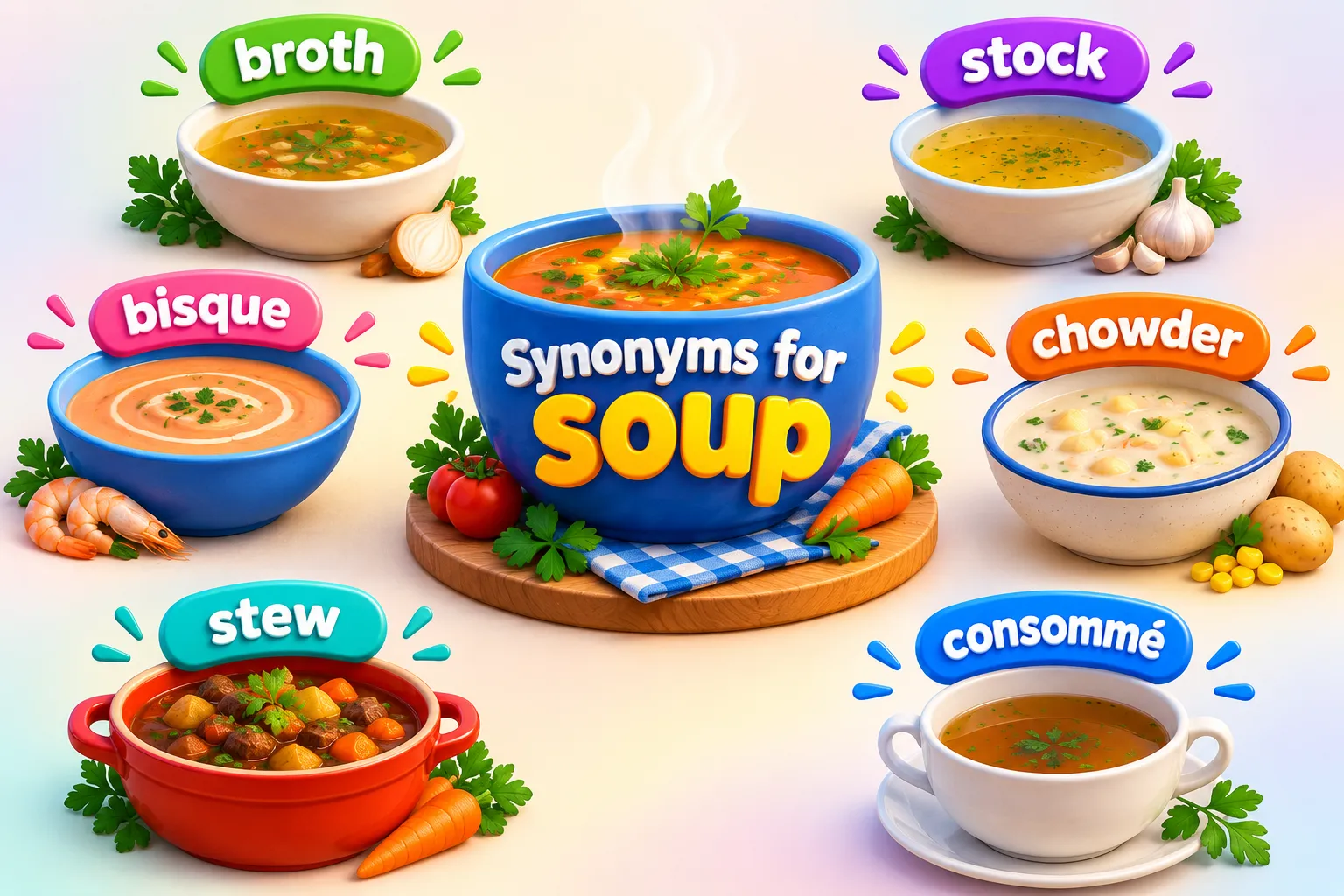
Useful synonyms and closely related words include broth, stock, chowder, bisque, consommé, potage, stew, purée, bouillon, and broth-based dish. These words are not always exact synonyms because each can describe a different type, texture, or cooking style. For example, “She made a warm vegetable soup for dinner.” Learning these alternatives helps English learners describe food more clearly, avoid repetition, and choose the right word for different dishes.
Soup is a liquid or semi-liquid food made by cooking ingredients in water, broth, or stock. Imagine coming home on a cold evening and enjoying a warm bowl of chicken soup. It feels simple, comforting, and filling. Soup is a common word because people eat many kinds of soups around the world. However, English has many related words that can describe soups with different ingredients, textures, and cooking methods. Learning these words helps English learners build stronger vocabulary and helps content writers avoid using the same word again and again. In this guide, we will explore the meaning of soup, its grammar, history, pronunciation, word formation, and 27 useful synonyms and related terms. We will also look at semantic groups, antonyms, examples, and common questions.
Meaning of Soup
Definition
Soup (Noun): A liquid or semi-liquid food made by cooking ingredients such as vegetables, meat, fish, grains, or beans in water, broth, or stock.
Examples
- I had a bowl of tomato soup for lunch.
- My mother made chicken soup for dinner.
Connotative Meaning
Connotation means the feelings or ideas that a word may suggest beyond its basic meaning.
- Positive tone: Soup can suggest warmth, comfort, health, and home cooking.
- Negative tone: In some contexts, soup may suggest something watery, messy, or poorly prepared.
- Neutral tone: Soup can simply describe a type of food without any emotional meaning.
Etymology
The word soup has a long history connected with the idea of bread soaked in liquid.
| Period | Development |
| Old English (450–1100) | The modern word soup was not commonly used in Old English. Similar food was described through words for broth, pottage, or cooked liquid food. |
| Middle English (1100–1500) | Soup developed from Old French soupe, meaning bread soaked in broth or liquid. |
| Modern English (1500–Present) | Soup became the common English word for a liquid or semi-liquid dish made from meat, vegetables, grains, or other ingredients. |
Pronunciation (IPA)
- IPA: /suːp/
- Syllables: soup — 1 syllable
Affixation Pattern of Soup
- Root: soup
- Prefix: None
- Suffix: None
- Word formations:
- soup — noun
- soupy — adjective
- soups — plural noun
- souped — verb, informal
- souping — verb, informal
- soup kitchen — noun phrase
- soup bowl — noun phrase
- soup maker — noun
27 Synonyms of Soup With Meaning & Examples
Note: English does not have 30 perfect synonyms for soup. The list below includes close synonyms, types of soup, and closely related culinary terms. This gives writers more accurate choices without pretending that every word has exactly the same meaning.
1. Broth (Noun)
Meaning: A thin liquid made by cooking meat, vegetables, or other ingredients in water.
Examples:
- The chicken broth was warm and flavorful.
- Add some vegetable broth to the pot.
2. Stock (Noun)
Meaning: A flavorful liquid made by simmering bones, meat, vegetables, or herbs.
Examples:
- The chef made fresh chicken stock.
- Use vegetable stock for the soup.
3. Chowder (Noun)
Meaning: A thick soup usually made with milk or cream, vegetables, and seafood or meat.
Examples:
- We ordered a bowl of clam chowder.
- The creamy chowder was delicious.
4. Bisque (Noun)
Meaning: A smooth, rich soup traditionally made with seafood.
Examples:
- She ordered lobster bisque.
- The restaurant serves a creamy tomato bisque.
5. Consommé (Noun)
Meaning: A clear, highly flavored soup made from carefully clarified stock.
Examples:
- The chef served beef consommé.
- The clear consommé had a rich flavor.
6. Potage (Noun)
Meaning: A thick soup made by slowly cooking vegetables, meat, or grains.
Examples:
- The old recipe included a vegetable potage.
- We enjoyed a warm potato potage.
7. Purée (Noun)
Meaning: A smooth food made by blending cooked ingredients into a soft mixture.
Examples:
- The chef prepared a carrot purée.
- The smooth pea purée was served warm.
8. Bouillon (Noun)
Meaning: A clear broth made from meat, vegetables, or stock.
Examples:
- The recipe calls for beef bouillon.
- She drank a cup of hot bouillon.
9. Stew (Noun)
Meaning: A thick dish of meat and vegetables cooked slowly in liquid.
Examples:
- We ate beef stew on a cold night.
- The vegetable stew was rich and filling.
10. Pottage (Noun)
Meaning: A thick cooked dish made from vegetables, grains, or meat.
Examples:
- Medieval families often prepared simple pottage.
- The book describes a hearty vegetable pottage.
11. Broth-based dish (Noun)
Meaning: A food dish in which ingredients are cooked and served in a thin liquid.
Examples:
- This is a light broth-based dish.
- I prefer broth-based dishes in winter.
12. Liquid food (Noun)
Meaning: Food that is mainly in liquid form.
Examples:
- Soup is a common type of liquid food.
- Liquid foods can be easy to eat when you feel unwell.
13. Hot broth (Noun)
Meaning: A warm, flavorful liquid often served alone or with other ingredients.
Examples:
- She drank hot broth after coming inside.
- The hot broth warmed everyone.
14. Cream soup (Noun)
Meaning: A smooth soup made creamy with milk, cream, or another ingredient.
Examples:
- I made a cream soup with mushrooms.
- The cream soup was rich and smooth.
15. Vegetable soup (Noun)
Meaning: A soup made mainly from cooked vegetables and liquid.
Examples:
- We had vegetable soup for lunch.
- Her vegetable soup contained carrots and peas.
16. Meat soup (Noun)
Meaning: A soup containing meat as an important ingredient.
Examples:
- Grandma prepared a hearty meat soup.
- The meat soup had beef and potatoes.
17. Chicken soup (Noun)
Meaning: A soup prepared with chicken, vegetables, and usually broth.
Examples:
- Chicken soup is popular as a comfort food.
- He made chicken soup for his family.
18. Tomato soup (Noun)
Meaning: A soup in which tomatoes are the main ingredient.
Examples:
- I like tomato soup with bread.
- The tomato soup was warm and creamy.
19. Noodle soup (Noun)
Meaning: A soup containing noodles as a main ingredient.
Examples:
- We ordered spicy noodle soup.
- The noodle soup was filling.
20. Seafood soup (Noun)
Meaning: A soup made with seafood such as fish, shrimp, or shellfish.
Examples:
- The restaurant serves seafood soup.
- Their seafood soup contains fresh shrimp.
21. Bean soup (Noun)
Meaning: A soup made mainly with beans and other ingredients.
Examples:
- Bean soup is rich and filling.
- She cooked a large pot of bean soup.
22. Lentil soup (Noun)
Meaning: A soup made mainly from cooked lentils.
Examples:
- Lentil soup is easy to prepare.
- We had spicy lentil soup for dinner.
23. Creamy soup (Noun)
Meaning: A soup with a thick, smooth, and soft texture.
Examples:
- The creamy soup tasted wonderful.
- I prefer creamy soup in winter.
24. Pureed soup (Noun)
Meaning: A soup made by blending cooked ingredients until smooth.
Examples:
- The chef served a smooth pureed soup.
- Pureed soup can have a very soft texture.
25. Clear soup (Noun)
Meaning: A soup with a thin, transparent broth.
Examples:
- She ordered a bowl of clear soup.
- Clear soup is often light and simple.
26. Thick soup (Noun)
Meaning: A soup with a dense texture and little free liquid.
Examples:
- The thick soup contained potatoes and beans.
- I enjoy thick soup on cold days.
27. Hotpot (Noun)
Meaning: A dish in which meat, vegetables, or other ingredients cook together in a flavorful liquid.
Examples:
- The family shared a large hotpot.
- We cooked vegetables in the hotpot.
Prototype Meaning
The most typical meaning of soup is a warm, liquid food served in a bowl. People often imagine ingredients such as vegetables, meat, noodles, beans, or spices cooked in water or broth. A simple bowl of chicken soup or vegetable soup is a common example. Soup can be thin and clear or thick and creamy.
Prototype Categorization
- Thin liquid types: broth, bouillon, consommé, clear soup describe light and liquid foods.
- Thick soup types: chowder, potage, pottage, thick soup describe dense and filling foods.
- Smooth types: bisque, purée, cream soup, creamy soup, pureed soup focus on a soft texture.
- Ingredient-based types: chicken soup, tomato soup, lentil soup, bean soup, seafood soup, noodle soup identify the main ingredient.
- Related dishes: stew, hotpot, and pottage are closely related but may be thicker or prepared differently.
This grouping helps writers choose a word that matches the texture, ingredients, and cooking style instead of using soup for every situation.
Antonyms of Soup
There is no exact opposite of soup because it is a food category. However, these terms can describe foods with very different forms or textures.
| Word | Part of Speech | Meaning |
| Solid food | Noun | Food that keeps a firm shape rather than being liquid. |
| Dry food | Noun | Food with little or no liquid. |
| Solid dish | Noun | A prepared food that is mainly solid. |
| Dry dish | Noun | A meal prepared without a large amount of liquid. |
| Grilled food | Noun | Food cooked directly over heat and usually served without a liquid base. |
| Baked food | Noun | Food cooked in an oven and usually served in a solid form. |
Short Questions and Answers
What does soup mean?
Soup is a liquid or semi-liquid food made by cooking ingredients in water, broth, or stock.
When should soup be used?
Use soup when talking about a liquid or semi-liquid food served as a meal, starter, or side dish.
Is soup positive or negative?
Soup is neutral. It can suggest comfort, warmth, health, or enjoyment depending on the context.
How is soup different from similar words?
Soup is the general term. Broth is usually thinner, chowder is thicker and often creamy, bisque is smooth and rich, while stew is usually thicker and contains larger solid pieces.
Conclusion
Learning soup and its related words can make your English more precise and natural. The word soup is useful for everyday conversations, recipes, menus, and food writing, but alternatives such as broth, chowder, bisque, consommé, and stew can give your writing more detail. These words help you explain the texture, ingredients, and style of a dish without repeating the same word. English learners can also improve their speaking skills by practicing these words in simple sentences. Content writers can use them to make food descriptions more interesting and specific. Try learning a few new food-related words each day and use them in your own sentences. Regular vocabulary practice will improve your English confidence and help you choose the right word for every situation.
Read More:
Synonyms for persist: 28 Uplifting Alternatives for Writing

I’m Falak Naaz, an SEO writer at SynonymsInstant.com focused on creating clear, engaging, and search-friendly English content. I specialize in vocabulary, synonyms, antonyms, word usage, and language guides. I combine careful research with practical writing to deliver trustworthy content that helps readers choose the right words and improve their English with confidence.